Supplemental Data: NEBNext UltraShear® Long Read (NEB #E3430)

Return to Product Information

This page provides supplementary data and figures that support the performance and application of the NEBNext UltraShear Long Read product (NEB #E3430). These materials are intended to give users deeper insight into product validation, usage conditions, and experimental results. As part of our commitment to transparency and scientific rigor, this section will be updated as new data becomes available.
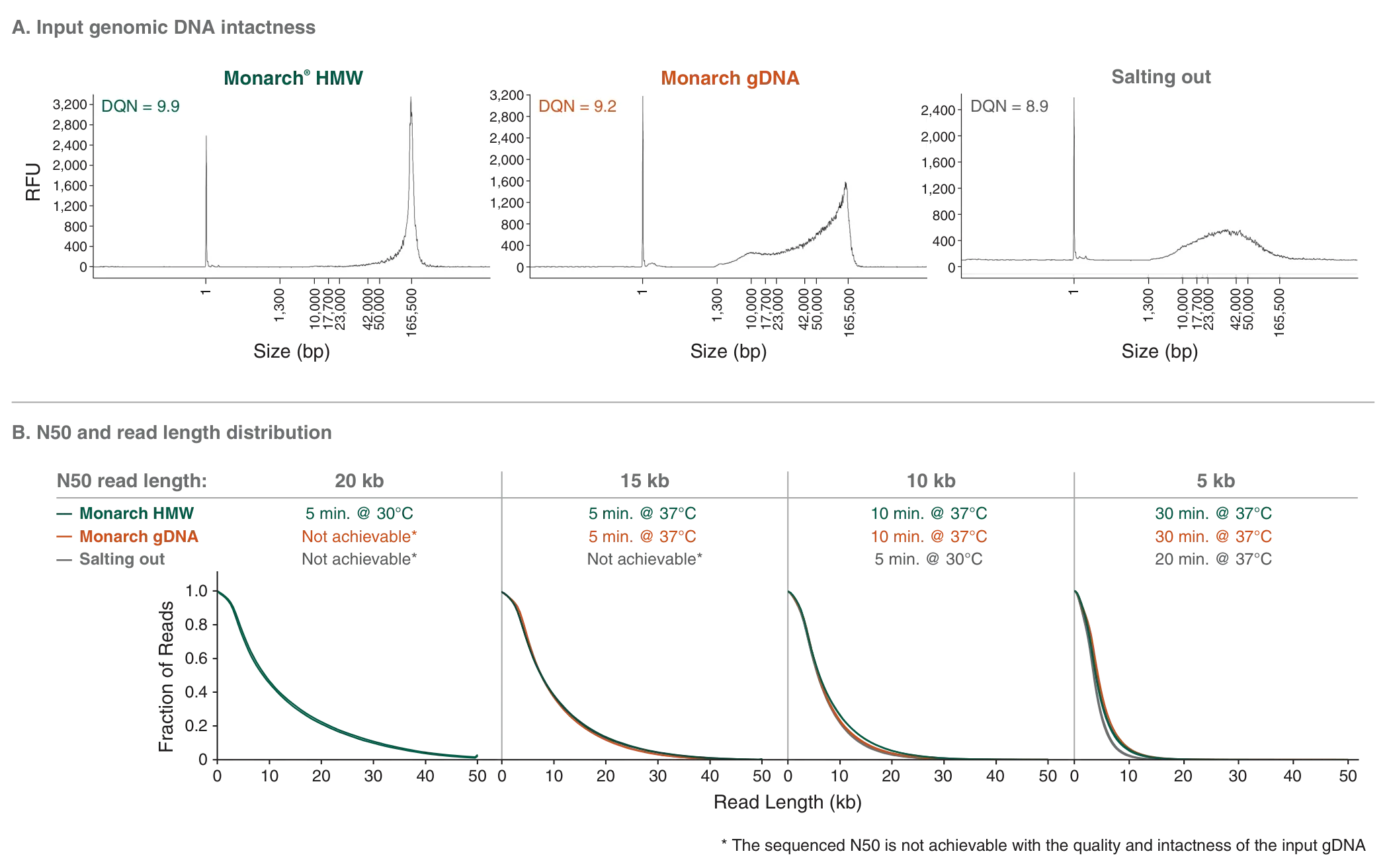
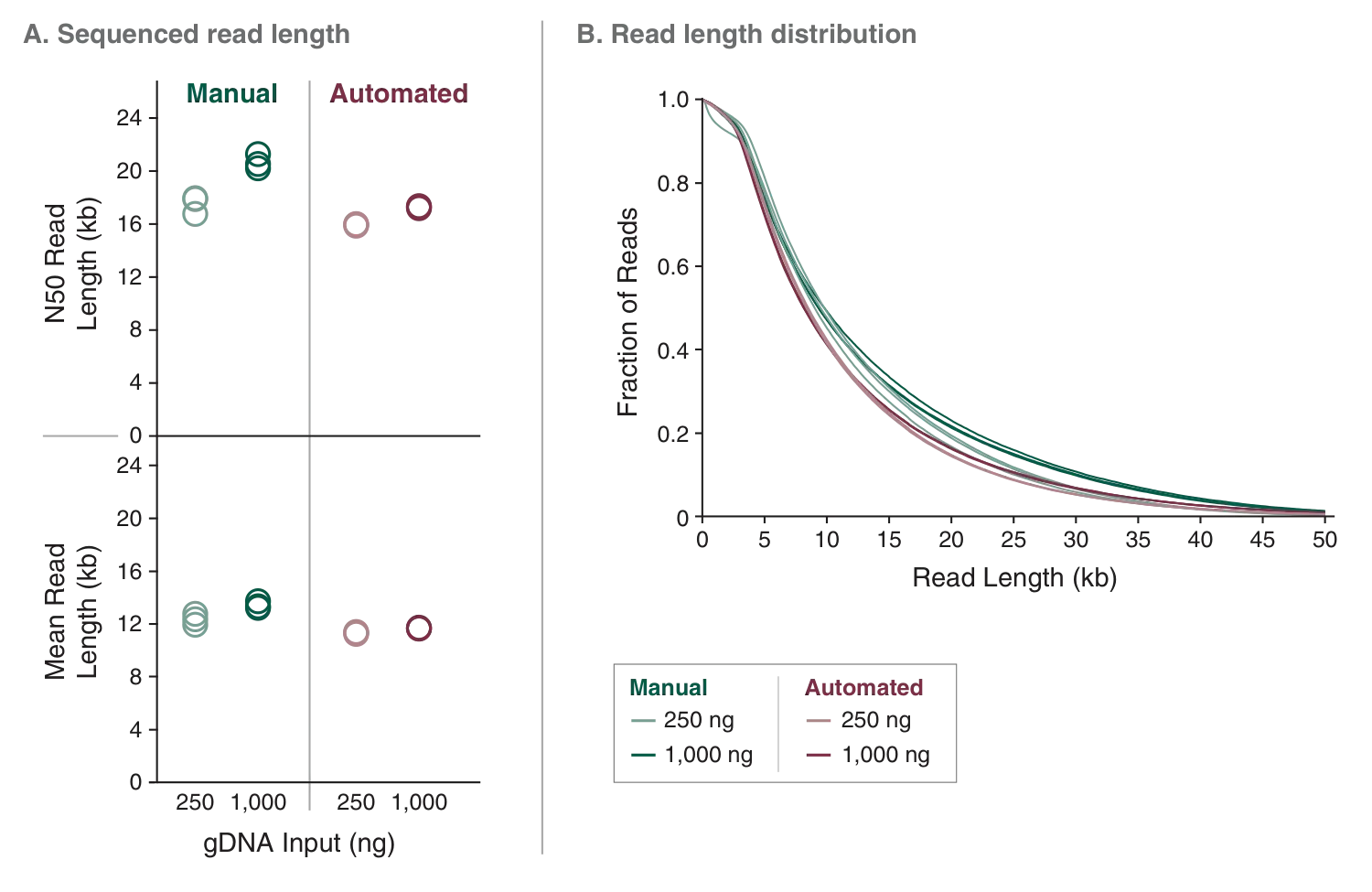
 

Figure 1: NEBNext UltraShear® Long Read is compatible with gDNA extracted from different methods

Compatibility of NEBNext UltraShear® Long Read with gDNA extractted from various extraction methods, including Monarch® High Molecular Weight – HMW, Monarch gDNA and salting out
gDNA was extracted from GM12878 human cells using the Monarch® HMW DNA Extraction Kit, Monarch Spin gDNA Extract Kit, or salting out extraction methods (DQNs = 9.9, 9.2 and 8.9 respectively). (A) Agilent® Femto Pulse® trace (165 kb protocol) showing the intactness of the extracted gDNA. 1,000 ng of each input was then fragmented for 5 minutes at 30°C or 5 to 30 minutes at 37°C followed by 15 minutes at 65°C with NEBNext UltraShear Long Read. Following fragmentation, 100 ng of fragmented DNA was used to generate libraries for Oxford Nanopore Technologies® (ONT) sequencing. The libraries were prepared with ONT’s Native Barcoding Kit 96 V14 and sequenced on a PromethION® 2 Solo (P2 Solo) instrument. (B) S-shaped curve plotting the fraction of reads at a particular read length or greater (in 100 bp bins), across different NEBNext UltraShear Long Read fragmentation conditions for each extraction input. Reads longer than 50 kb are represented as 50 kb. The fragmentation conditions to generate sequenced N50 read lengths of 20 kb, 15 kb, 10 kb and 5 kb for each extraction input are shown. If the extraction method is not listed, the sequenced N50 is not achievable with that quality and intactness of input gDNA. The s-shaped curves overlap well across the different input gDNA qualities under specific N50 conditions, demonstrating the tunability of NEBNext UltraShear Long Read. Technical replicates are shown across all conditions.


Figure 2: NEBNext UltraShear® Long Read is automation friendly

Automation capabilities of NEBNext UltraShear® Long Read, as depicted by sequenced read length and read length distribution
250 ng and 1,000 ng of gDNA (DQN = 9.9), extracted from GM12878 human cells using the Monarch® HMW DNA Extraction Kit, was fragmented with NEBNext UltraShear Long Read using either a manual workflow or an automated workflow on the SPT Labtech firefly®. Fragmentation conditions were 5 minutes at 30°C followed by 15 minutes at 65°C. Following fragmentation, libraries were prepared using Oxford Nanopore Technologies® (ONT) Native Barcoding Kit 96 V14 and sequenced on a PromethION® 2 Solo (P2 Solo) instrument. (A) Sequenced N50 and mean read lengths obtained using NEBNext UltraShear Long Read fragmentation under manual or automated conditions. (B) S-shaped curve plotting the fraction of reads at a particular read length or greater (in 100 bp bins) for all conditions. Reads longer than 50 kb are represented as 50 kb. Manual fragmentation with NEBNext UltraShear Long Read generated longer read lengths than the automated workflow, due to potential additional shearing by the instrument, which could be gDNA or platform dependent. However, automated fragmentation was more consistent across replicates. Three technical replicates are shown for each condition.


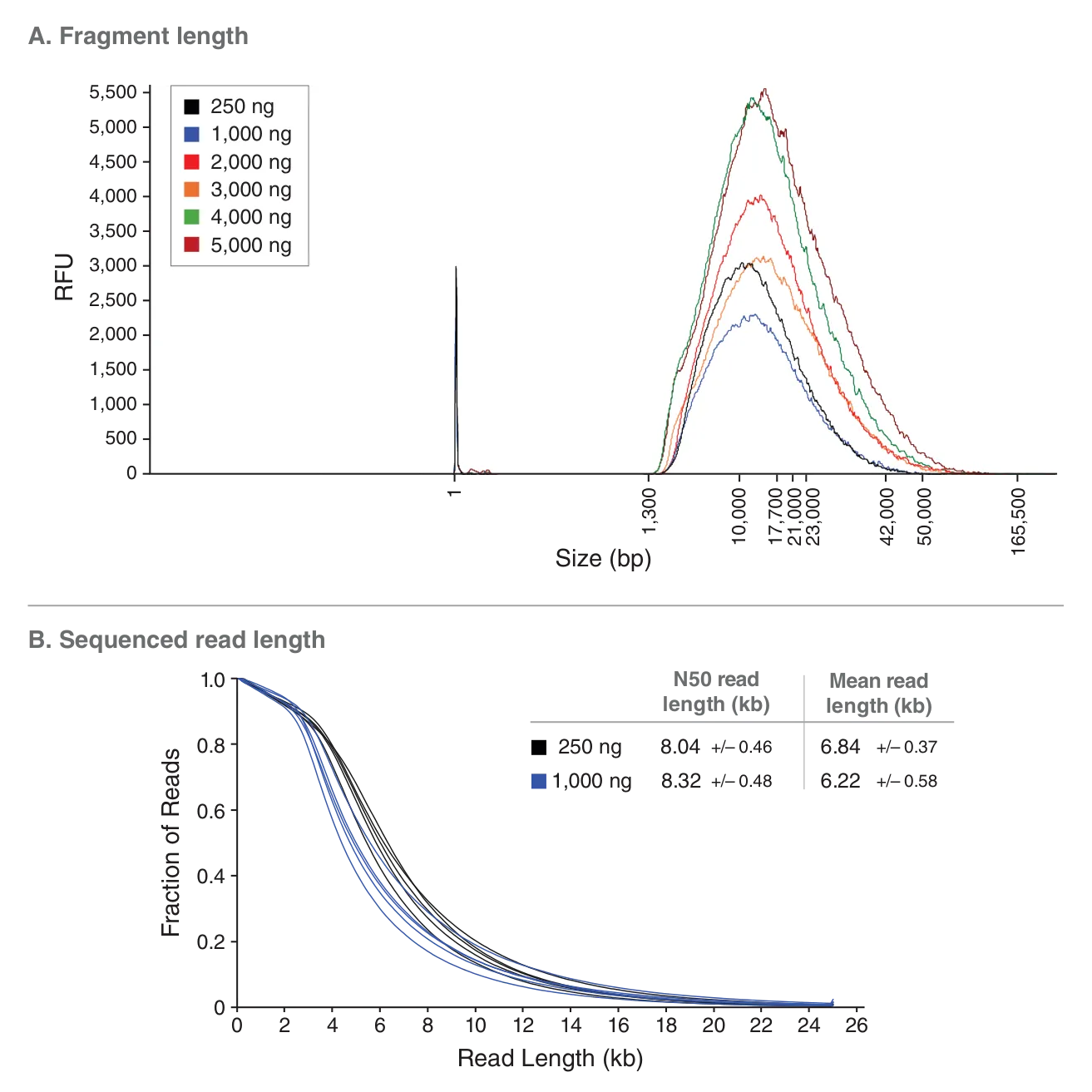
Figure 3: NEBNext UltraShear® Long Read is robust and reproducible across replicates and inputs

Fragment length and sequenced read length depicting reproducibility of NEBNext UltraShear® Long Read
250ng to 5,000 ng of GM12878 gDNA (commercially purchased, salting out extraction; DQN = 8.8) was fragmented for 5 minutes at 30°C followed by 15 minutes at 65°C with NEBNext UltraShear Long Read. (A) Agilent® Femto Pulse® trace (165kb protocol) showing consistent fragmentation size and profile when using NEBNext UltraShear Long Read. The 250 ng and 1000 ng fragmented samples were then used to generate libraries for Oxford Nanopore Technologies (ONT)® sequencing. The libraries were prepared using ONT’s Ligation Sequencing DNA V14 and sequenced on GridION® flow cells. (B) S-shape curve plotting the fraction of reads at a particular read length or greater (in 100 bp bins). Reads longer than 25 kb are represented as 25 kb. The table summarizes the sequenced N50 and mean read lengths of the two inputs. An average of five technical replicates and standard error are shown for each input.

Please reach out to your local NEB representative with any questions, or send us an email at info@neb.com.


Return to Product Information