Supplemental Data: NEBNext® Low-bias Small RNA Library Prep Kit (NEB #E3420)

Return to Product Information

This page provides supplementary data and figures that support the performance and application of the NEBNext Low-bias Small RNA Library Prep Kit (NEB #E3420). These materials are intended to give users deeper insight into product validation, usage conditions, and experimental results. As part of our commitment to transparency and scientific rigor, this section will be updated as new data becomes available.
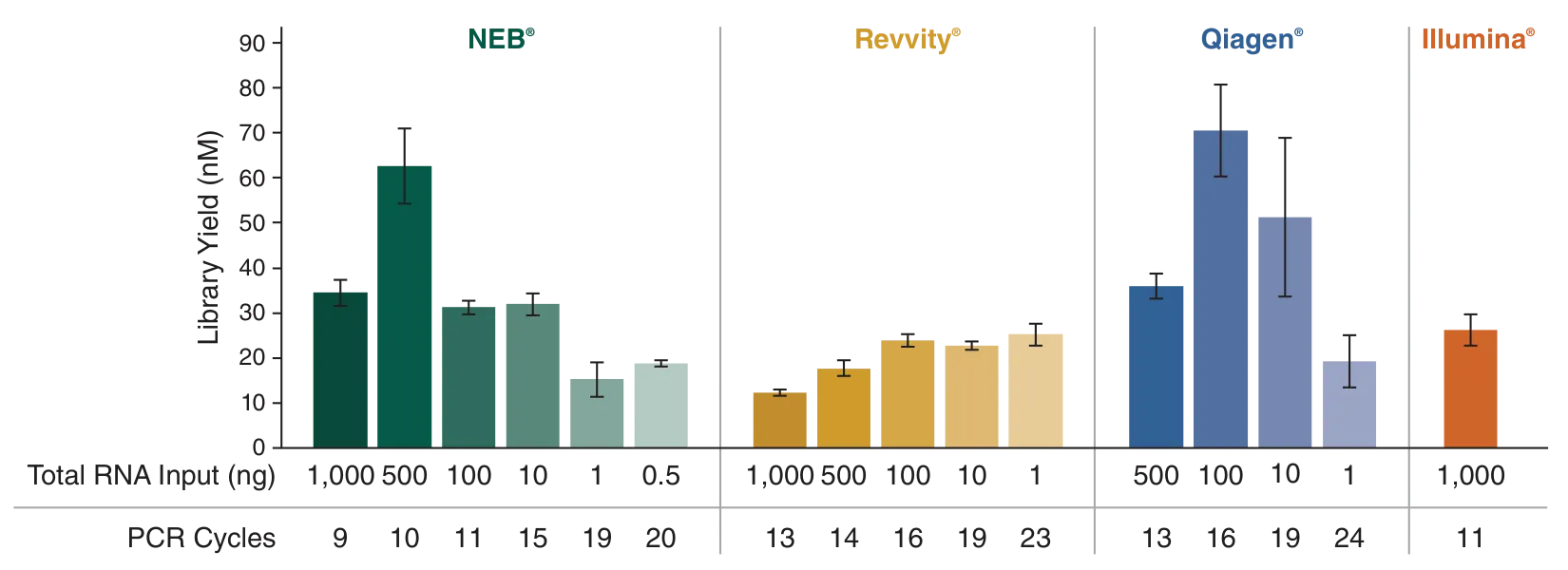
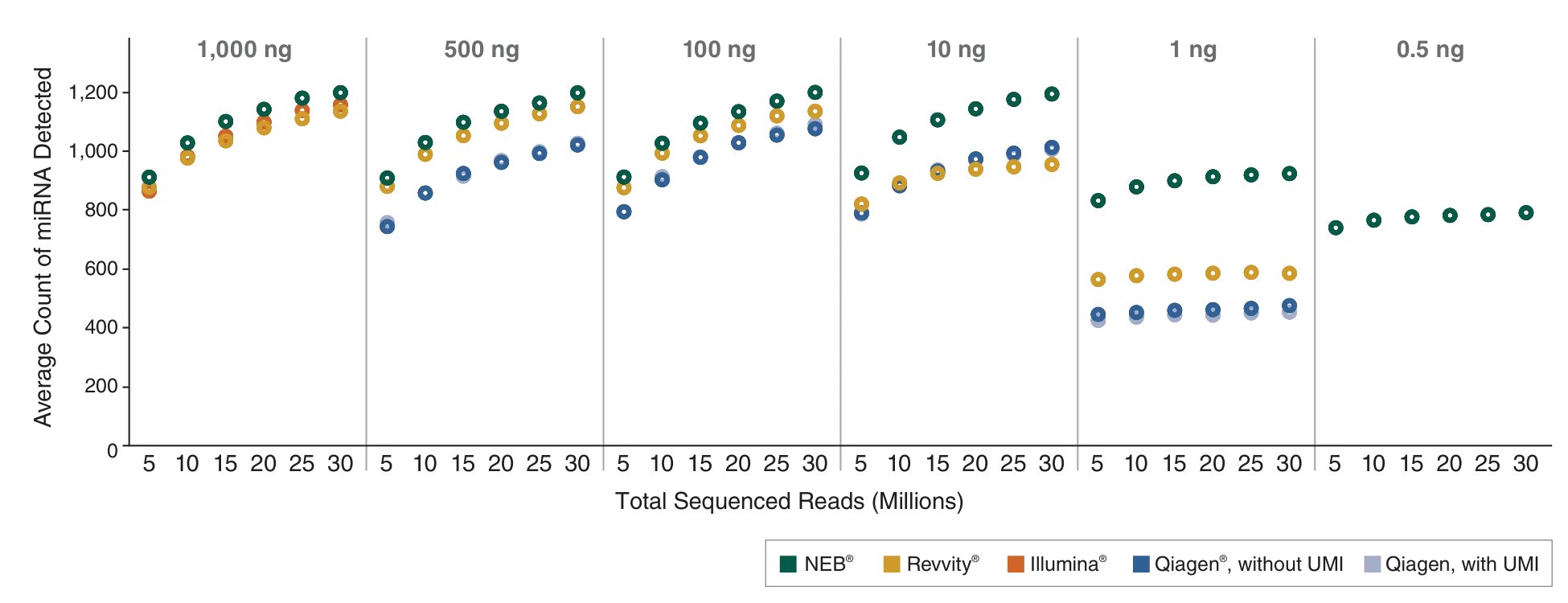
 

Figure 1: NEBNext Low-bias Small RNA Library Prep Kit produces robust library yields across a broad input range, with fewer PCR cycles

Bar graphs comparing library yield
NEBNext Low-bias Small RNA libraries were made using 1,000–0.5 ng of human brain total RNA (Takara #636530), with yields similar to, or higher than, competitors' kits, e.g., Revvity (NEXTFLEX Small RNA Sequencing Kit V4), Qiagen (QIAseq miRNA Library Kit) and Illumina (TruSeq Small RNA Library Prep), when using the manufacturer's protocol and the same RNA input. These yields were notable as the NEBNext libraries were typically prepared using 2–5 fewer PCR cycles than recommended by competitors' kits. NEBNext libraries were prepared following the bead size selection protocol after library amplification. Competitors’ libraries were made following each kit’s input guidelines and protocol recommendations. Library yields were determined on the Agilent TapeStation® using the High Sensitivity D1000 tape. Yields shown represent the average of three technical replicates, and the error bars represent standard deviation. NEBNext Low-bias Small RNA libraries deliver consistently higher yields across a broad range of inputs with fewer PCR cycles.


Figure 2: NEBNext Low-bias Small RNA Library Prep Kit detects the most miRNAs across a broad input range and sequencing depth

Plot depicting miRNA detection across broad input range
The number of miRNAs detected over increasing sequencing depths are shown for small RNA libraries made using 1,000–0.5 ng of human brain total RNA (Takara #636530). NEBNext Low-bias Small RNA libraries consistently detected more miRNAs at all sequencing depths when compared to competitor kits, e.g., Revvity (NEXTFLEX Small RNA Sequencing Kit V4), Qiagen (QIAseq miRNA Library Kit) and Illumina (TruSeq Small RNA Library Prep), prepared following manufacturers' input guidelines and protocol recommendations. NEBNext libraries were prepared following the bead size selection protocol after library amplification. Libraries were sequenced on Illumina NovaSeq 6000 (1 x 56 bases, or 1 x 72 based for Qiagen UMI) to a depth of 30 million reads. Sequenced libraries were progressively down-sampled from 30 million to 5 million reads, adaptor trimmed (Flexbar) and aligned to the hg38 genome with STAR (v2.7.8a). The STAR reference was built using gencode v35 main annotations supplemented with gencode tRNA annotations, rRNA annotations for subunits not included in gencode, and piRNA annotations from piRNAdb v1.7.6 that did not overlap with other annotations. The number of miRNAs observed with at least one read was averaged among three technical replicates for each down-sampling.


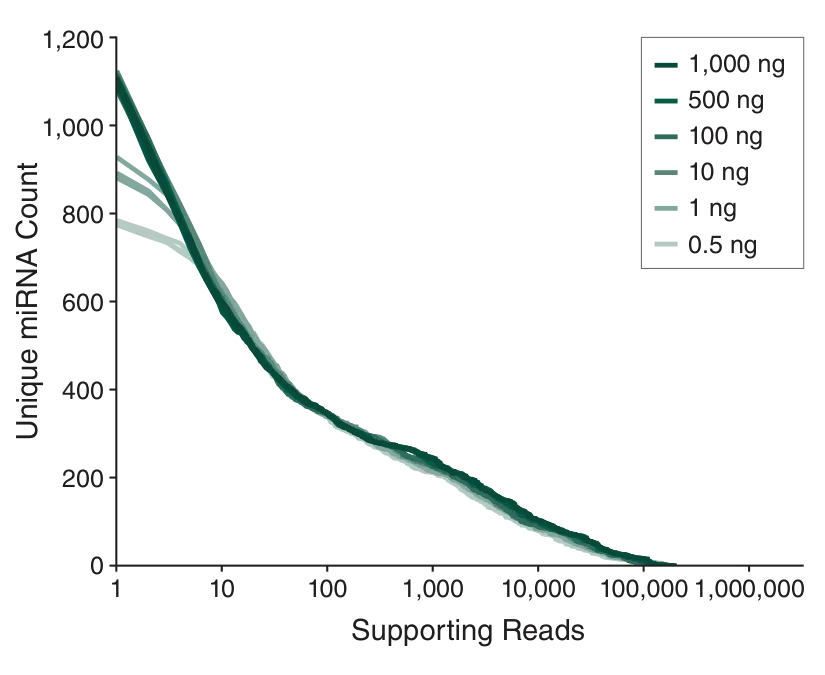
Figure 3: NEBNext Low-bias Small RNA Library Prep consistently identifies miRNAs across a broad input range

Graph depicting miRNA detection across a broad input range
The number of miRNAs detected in NEBNext Low-bias Small RNA Libraries is shown. The graph shows a cumulative detection histogram for mapped miRNAs at different supporting-read thresholds. At thresholds of 10 or greater supporting reads, all inputs share a similar miRNA-detection profile. Libraries made using 1,000–10 ng of human brain total RNA (Takara #636520) had similar miRNA profiles and detected ~1,110 miRNAs with at least 1 read. The 1 ng and 0.5 ng human brain total RNA inputs performed well but detected slightly fewer miRNAs, with ~900 miRNAs and ~780 miRNAs for the 1 ng and 0.5 ng inputs, respectively. Libraries were sequenced on Illumina NovaSeq 6000 (1 x 56 bases), and 15 million reads were adaptor trimmed (Flexbar) and aligned to the hg38 genome with STAR (v2.7.8a). The STAR reference was built using gencode v35 main annotations supplemented with gencode tRNA annotations, rRNA annotations for subunits not included in gencode, and piRNA annotations from piRNAdb v1.7.6 that did not overlap with other annotations. The gencode annotation had a total of 1,881 miRNAs.


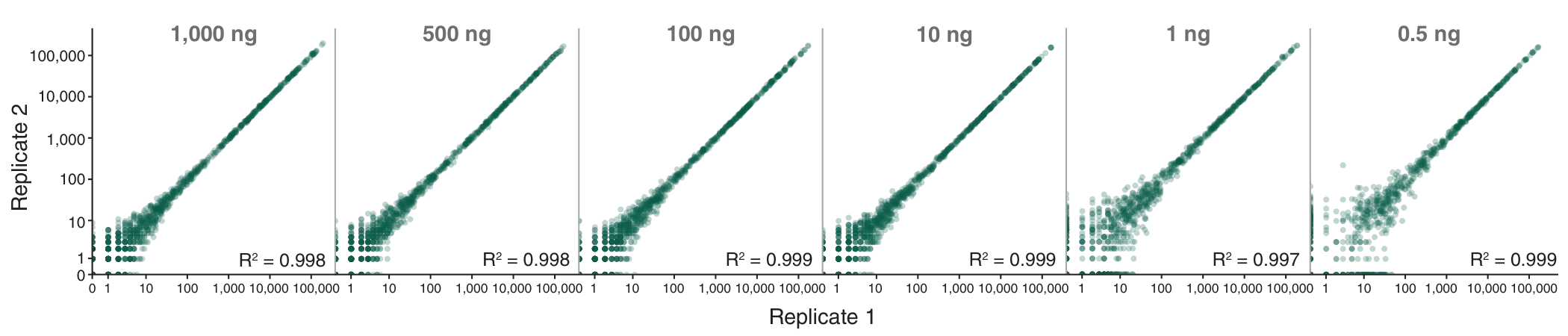
Figure 4: NEBNext Low-bias Small RNA Library Prep miRNA detection is highly reproducible

Plots representing reproducibility of miRNA detection
NEBNext Low-bias Small RNA libraries are highly correlated for all RNA inputs. Libraries were made using 1,000–0.5 ng human brain total RNA (Takara #636530), using the bead size-selection protocol after library amplification. Linear correlations of mapped miRNAs between two technical replicates for each input are shown. Each point represents an individual miRNA, axes are shown in log scale, and R2 values for linear fit are shown for each input. The correlations indicate that libraries are highly reproducible for each input. Libraries were sequenced on Illumina NovaSeq 6000 (1x 56 bases), and 15 million reads were adaptor trimmed (Flexbar) and aligned to the hg38 genome with STAR (v2.7.8a). The STAR reference was built using gencode v35 main annotations (contains 1,881 miRNAs) and was supplemented with gencode tRNA annotations, rRNA annotations for subunits not included in gencode, and piRNA annotations from piRNAdb v1.7.6 that did not overlap with other annotations.


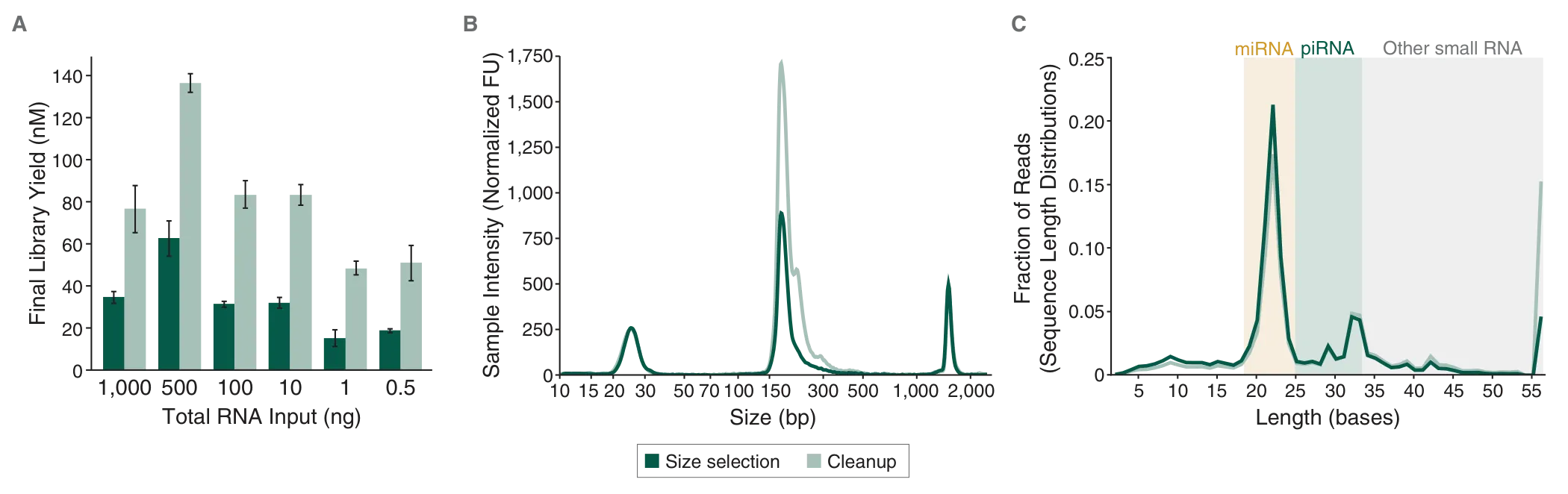
Figure 5: Differential enrichment of small RNAs through tuneable library profiles: Robust yields with distinct sizes

Data depicting differential enrichment of small RNAs through tuneable library profiles, resulting in Robust yields with distinct sizes
The NEBNext Low-bias Small RNA library profile can be adjusted by modifying the bead purification strategy after library amplification. A bead size selection approach results in a more focused enrichment of miRNAs, whereas a bead cleanup strategy results in a profile with increased representation of larger-sized small RNA molecules. During bead size selection, a two-sided size selection was used to define the library size from ~170–220 bp. The bead cleanup-based approach uses a single-sided cutoff, which results in a final library size of ~170–300 bp.
A: Libraries were prepared using 1,000–0.5 ng of human brain total RNA (Takara #636530) following either the size selection or the bead clean-up strategies for final library purification. Both library bead purification methods produce robust yields across a broad input range. Bars represent the average from three technical replicates, with error bars indicating standard deviation. Library yields are higher for libraries that are made using the bead cleanup approach.
B: This panel demonstrates representative traces of the small RNA library profiles for the 500 ng inputs, using either the bead size selection or the bead cleanup methods. The traces were generated using libraries run on an Agilent TapeStation High Sensitivity D1000 tape. Bead cleanup retains more of the large library fragments, while size-selection focuses the final library on miRNA-containing fragments.
C: Insert-size distributions from the 500 ng bead size-selected and bead-cleaned libraries confirmed the presence of expected miRNA, piRNA, and other small RNA sizes. Length was determined based on read lengths following trimming of adaptor sequences (Flexbar). Libraries were sequenced on Illumina NovaSeq 6000 (1x 56 bases), and 15 million reads were adaptor trimmed (Flexbar). The bead-size selection libraries had a greater fraction of reads in the miRNA size range (18–24 nt), while the bead-cleanup libraries had a greater fraction of reads for other small RNA species (> 33 nt).
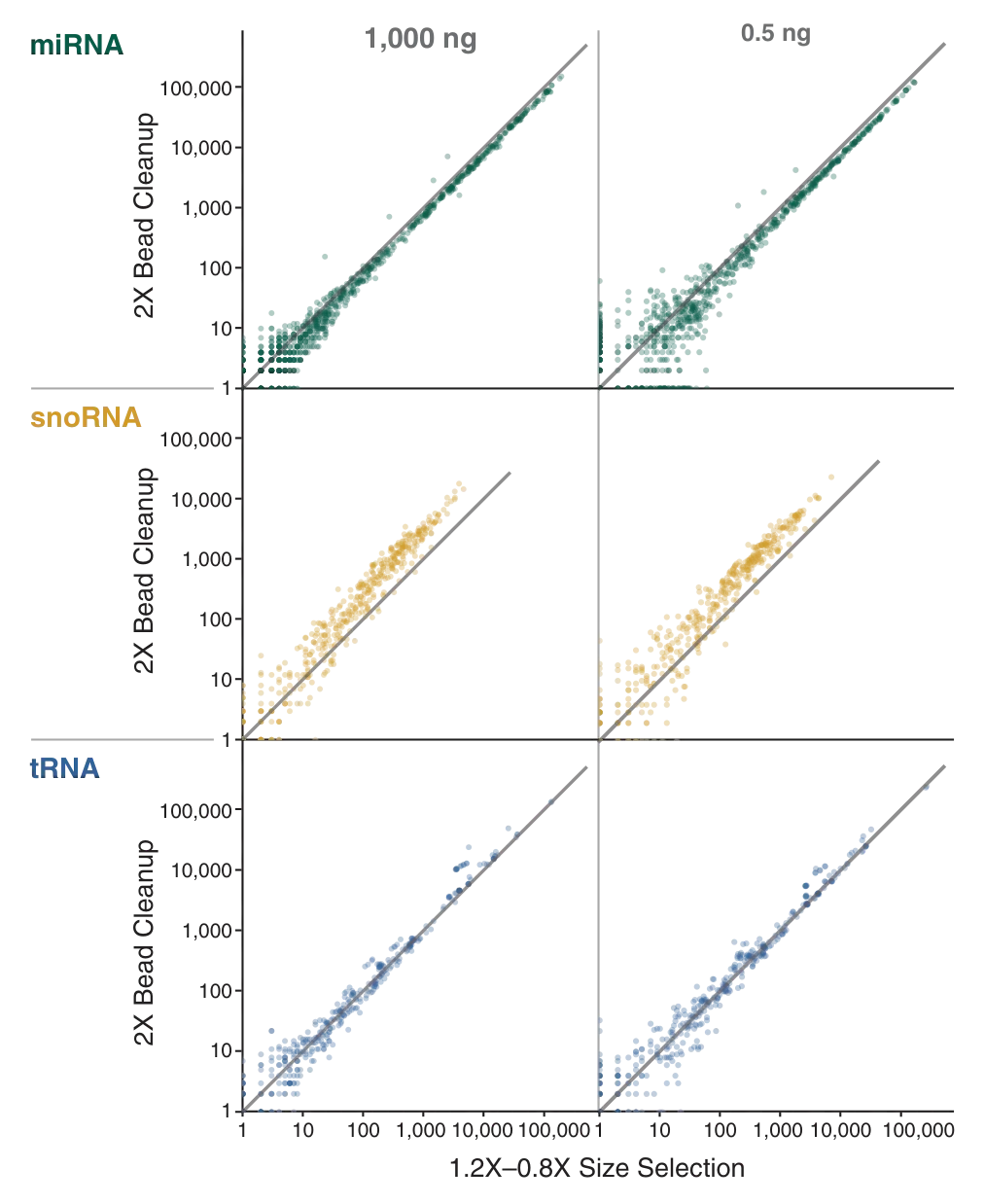
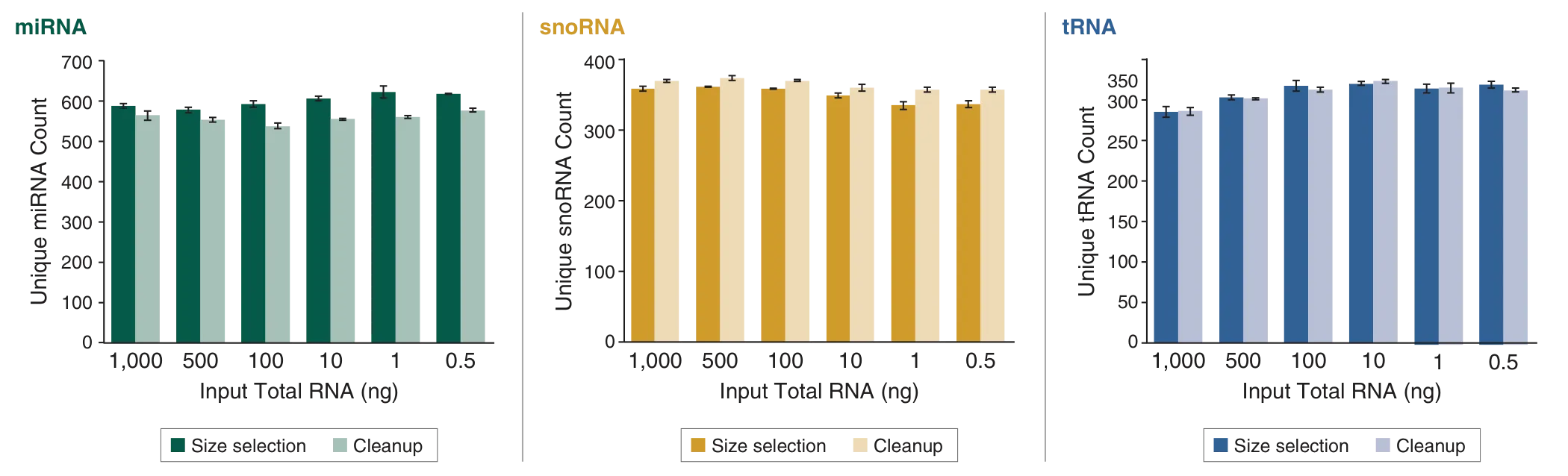
 

Figure 6: Differential enrichment of small RNAs through tuneable library profiles: Species-specific read distributions

Plots depicting control of library enrichment with different small RNAs
Correlations were performed to highlight the distribution of small RNAs (miRNA, snoRNA and tRNA) detected using bead size selection or bead cleanups after library amplification. NEBNext Low-bias Small RNA libraries were prepared from 1,000 ng and 0.5 ng of human brain total RNA (Takara #636530). Libraries prepared using size selection had increased miRNA coverage, while bead cleanups had increased coverage of snoRNA. tRNA fragments were predominantly located on the diagonal, indicating equal representation between the bead purification methods. The choice of library purification method after amplification allows users to direct coverage of different small RNA species across a broad input range. Libraries were sequenced on Illumina NovaSeq 6000 (1 x 56 bases), 15 million reads were adaptor trimmed (Flexbar) and aligned to the hg38 genome with STAR (v2.7.8a). The STAR reference was built using gencode v35 main annotations supplemented with gencode tRNA annotations, rRNA annotations for subunits not included in gencode, and piRNA annotations from piRNAdb v1.7.6 that did not overlap with other annotations. Correlations of mapped miRNA, snoRNA or tRNA were performed using one representative case of each library purification method for each input. Each point represents an individual small RNA.


Figure 7: Differential enrichment of small RNAs through tuneable library profiles: Impact of bead purification choice on detection

Bar graphs depicting the ability to modify library detection for different small RNAs
Counts of unique miRNA, snoRNA and tRNA (or fragments) are shown for NEBNext Low-bias Small RNA libraries prepared with either bead size selection or bead cleanup after library amplification. Libraries were made using 1,000–0.5 ng of human brain total RNA (Takara #636530), and for all inputs miRNAs are enriched for bead size-selected libraries. In contrast, snoRNAs are increased in libraries that underwent bead cleanup and tRNA fragments are equally well represented in both library bead purification methods. Libraries were sequenced on Illumina NovaSeq 6000 (1 x 56 bases) and 15 million reads were adaptor trimmed (Flexbar) and aligned to the hg38 genome with STAR (v2.7.8a). The STAR reference was built using gencode v35 main annotations supplemented with gencode tRNA annotations, rRNA annotations for subunits not included in gencode, and piRNA annotations from piRNAdb v1.7.6 that did not overlap with other annotations. The data shown represents the average of three technical replicates (unique small RNAs detected with at least 10 supporting reads), and the error bars represent standard deviation.


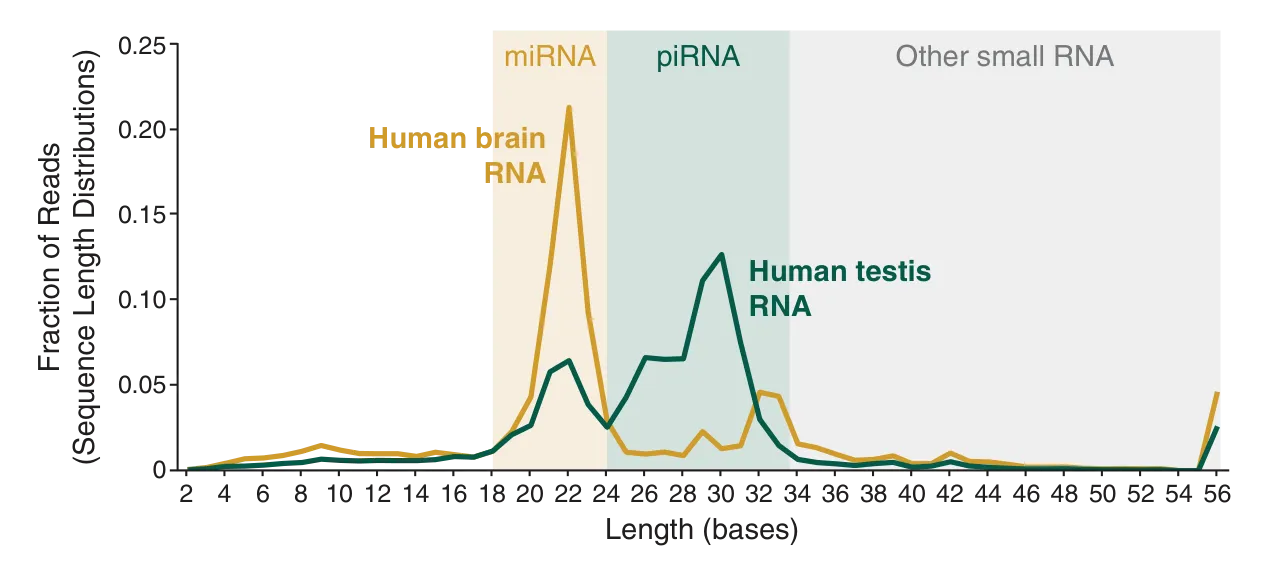
Figure 8: NEBNext Low-bias Small RNA Library Prep provides accurate representation of 2'-O-methylated miRNAs and piRNAs in brain and testis

Line graph depicting representation of miRNAs and piRNAs in brain and testis
The NEBNext Low-bias Small RNA Library Prep Kit accurately represents the difference in small RNA fractions between biological samples. Sequencing profiles of small RNAs prepared using the NEBNext Low-bias Small RNA Library Prep Kit from either 100 ng human brain total RNA (Takara #636530) or human testis total RNA (BioChain Cat # R1234260-50), following the bead size selection protocol after library amplification. The low-bias nature of the NEBNext libraries is demonstrated by the expected shift in the proportion of miRNAs and compared to piRNAs between human brain and testis. The human testis is known to be enriched for piRNA as compared to miRNA (doi:10.1261/rna.640307, doi:10.1038/nature04917, doi:10.1101/gad.1425706, doi:10.1101/gad.1434406), while the human brain is enriched for miRNAs. For each sample type, the distribution of insert sizes as a fraction of the total sequenced reads is shown, sizes for different small RNAs are indicated for miRNA (18–23 nt), piRNA (24–33 nt), and other small RNA types (> 33 nt). Libraries were sequenced on Illumina NovaSeq 6000 (1x 56 bases), 15 million reads were adaptor trimmed (Flexbar) and insert sizes plotted as a fraction of total reads.


Please reach out to your local NEB representative with any questions, or send us an email at info@neb.com.


➾ Return to Product Information