CloneCampaign_App_Hero

DNA End Modification

Modification of the termini of double-stranded DNA is often necessary to prepare the molecule for cloning. DNA ligases require a 5' monophosphate for adenylation of the donor end, while the acceptor end requires a 3' hydroxyl group. Additionally, the sequences to be joined need to be compatible: either a blunt end being joined to another blunt end, or a cohesive end with a complementary overhang to another cohesive end. End modifications are performed to improve the efficiency of the cloning process, ensure the ends to be joined are compatible, and to optimize the positioning of regulatory and translated sequences.

Learn more about the various ways to modify DNA ends: Dephosphorylation, Blunting, Phosphorylation, A-tailing.


Choose Type:

DNA End Modification includes these areas of focus:
Phosphorylation (Kinase)
Dephosphorylation
Blunting
A-tailing
FAQs for DNA End Modification
Protocols for DNA End Modification
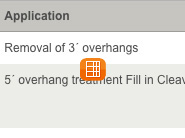
Common Applications of Exonucleases and Endonucleases
NEB provides a list of common applications for our exonucleases and endonucleases.
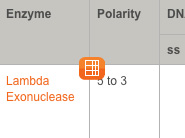
Properties of Exonucleases and Endonucleases
NEB supplies many nucleases; several characteristics should be considered when choosing the one best suited to your particular research needs.
Legal Information

Products and content are covered by one or more patents, trademarks and/or copyrights owned or controlled by New England Biolabs, Inc (NEB). The use of trademark symbols does not necessarily indicate that the name is trademarked in the country where it is being read; it indicates where the content was originally developed. All other trademarks are the property of their respective owners. The use of this product may require the buyer to obtain additional third-party intellectual property rights for certain applications. For more information, please email busdev@neb.com.

This product is intended for research purposes only. This product is not intended to be used for therapeutic or diagnostic purposes in humans or animals.



Choose Product:

DNA End Modification
Close

5-hydroxymethyluridine DNA Kinase

Phosphorylation (Kinase)

Close

5-hydroxymethyluridine DNA Kinase

Close

Quick Blunting™ Kit

Close

T4 DNA Ligase Reaction Buffer

Close

T4 Polynucleotide Kinase

Close

T4 Polynucleotide Kinase (3' phosphatase minus)

Close

T4 Polynucleotide Kinase Reaction Buffer

Dephosphorylation

Close

Antarctic Phosphatase

Close

Antarctic Phosphatase Reaction Buffer

Close

Quick CIP

Close

Shrimp Alkaline Phosphatase (rSAP)

Blunting

Close

DNA Polymerase I, Large (Klenow) Fragment

Close

Mung Bean Nuclease

Close

Quick Blunting™ Kit

Close

T4 DNA Polymerase

A-tailing

Close

Deoxynucleotide (dNTP) Solution Set

Close

Klenow Fragment (3´→5´ exo-)

Close

NEBNext® dA-Tailing Module

Close

NEBNext® dA-Tailing Reaction Buffer

Close

Taq DNA Polymerase with Standard Taq (Mg-free) Buffer

Close

Taq DNA Polymerase with Standard Taq Buffer

Close

Taq DNA Polymerase with ThermoPol® Buffer

Close

Terminal Transferase

Close

ThermoPol® Reaction Buffer

Phosphorylation (Kinase)
Close

5-hydroxymethyluridine DNA Kinase

Close

Quick Blunting™ Kit

Close

T4 DNA Ligase Reaction Buffer

Close

T4 Polynucleotide Kinase

Close

T4 Polynucleotide Kinase (3' phosphatase minus)

Close

T4 Polynucleotide Kinase Reaction Buffer

Dephosphorylation
Close

Antarctic Phosphatase

Close

Antarctic Phosphatase Reaction Buffer

Close

Quick CIP

Close

Shrimp Alkaline Phosphatase (rSAP)

Blunting
Close

DNA Polymerase I, Large (Klenow) Fragment

Close

Mung Bean Nuclease

Close

Quick Blunting™ Kit

Close

T4 DNA Polymerase

A-tailing
Close

Deoxynucleotide (dNTP) Solution Set

Close

Klenow Fragment (3´→5´ exo-)

Close

NEBNext® dA-Tailing Module

Close

NEBNext® dA-Tailing Reaction Buffer

Close

Taq DNA Polymerase with Standard Taq (Mg-free) Buffer

Close

Taq DNA Polymerase with Standard Taq Buffer

Close

Taq DNA Polymerase with ThermoPol® Buffer

Close

Terminal Transferase

Close

ThermoPol® Reaction Buffer